
INTERNATIONAL CRIME FICTION ASSOCIATION
  • Home
  • Meet the Team
    • Contact
  • Blog
  • Journal
  • Conferences
    • Captivating Criminality 13
    • Past Conferences >
      • 2025 Conference
      • 2024 Conference
      • 2023 Conference (Aug-Sept)
      • 2023 Conference (March)
      • 2022 Conference
      • 2021 Online November Event
      • 2020 Conference
      • 2019 Conference
      • 2018 Conference
      • 2017 Conference
      • 2016 Conferences
      • 2015 Conference
  • Book Prize
    • 2024 Prize
    • 2023 Prize
    • 2022 Prize
    • 2021 Prize
    • 2020 Prize
    • 2019 Prize
    • 2018 Prize
  • ECR/PGR Network
    • Meet the ECR/PGR Council
  • Join Us!

The Association Blog

Here you will find everything from reviews, calls for papers, articles, and any crime fiction related news. Our aim is to create a broad, diverse and well-connected community of crime-fiction researchers and a space to share any and all things crime fiction. If you are interested in disseminating your research through The Association Blog, please get in touch.
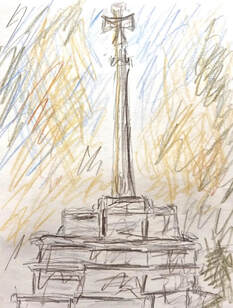
Call for Proposals: Golden Age Detection Goes to War

22/1/2024

0 Comments

 
Picture
Chapter proposals are invited for an edited collection exploring and evaluating the representation and navigation of war in writing set in, looking back to, and negotiating the parameters of, the Golden Age of detective fiction.

​The Golden Age of detective fiction is often held to be a) English-centric, b) situated between the First and Second World Wars and c) focused on puzzles and clues rather than social and cultural reflection and context. Nevertheless, a number of well-known and recently rediscovered authors not only focus on murder and mystery in wartime, but reflect on the presence of war and resulting upheaval in society, culture, understandings of morality, and collective and individual psychology. These concerns and settings can be explicit and central, as in ECR Lorac’s Blitz-set Murder By Matchlight (1945), or in the margins, as in Dorothy L. Sayers’s mentions of Nazi ideology in Gaudy Night (1935). Public imagination and academic conversations have started to capture the diverse, often nuanced, and impactful significance of Golden Age detective fiction, but its engagement with war, while richly varied and textured, has not been widely studied.

The aim of this volume is to extend the study of Golden Age detective fiction, conventionally read as representing and reinforcing ideas of law, tradition, and order, into new avenues that consider its response to and roles within periods of crisis and chaos. In the last thirty years or so, particularly since Alison Light’s influential Forever England: Literature, Femininity and Conservatism Between the Wars (Routledge 1991) with its chapter on Agatha Christie’s ‘Conservative modernity’, puzzle-based detective fiction has understood as a body of literature reflecting and exploring wider anxieties within its own highly artificial parameters. Gill Plain’s Literature of the 1940s: War, Postwar and ‘Peace’ (2013) and Ariela Freedman’s work on shellshock in Dorothy L. Sayers’s Lord Peter Wimsey mysteries, for instance, remain valuable touchstones here. The editors of Golden Age Detection Goes to War, then,envisage a collection of essays that builds on this work, challenging traditional readings of isolation, escapism, or simple visions of national identity and purpose, and interrogating the role of these popular texts in the study not only of war fronts and battlefields, but also of complex moralities, social and cultural upheaval, trauma, displacement, and individual, national and internationally negotiated identities.

Our first co-edited collection explored the structuring principle of war in the work of the ‘Queen of the Golden Age’ Agatha Christie, demonstrating a recurring anxiety regarding war and its aftermath that permeates the idiom and structure of Christie’s work as well as plotting and characterisation; here we intend to follow up this investigation by extending our scope to both the Golden Age and later authors such as Robin Stevens and Catriona McPherson, who explicitly hark back to its conventions but develop more modern thematic approaches, foregrounding themes, issues and anxieties that would then have been subtextual. This will also afford readings of recently rediscovered and republished crime and mystery fiction from the early and mid-twentieth centuries by, for example, Dean Street Press and British Library Classics.
Engaging with the immediacy and legacy of war in detective fiction, then, continues our project of turning away from a solely narratologically-oriented approach to this mode of detective fiction and towards a multiplicity of feminist, spatial, queer, post-colonial, and sociological readings that contextualise Anglo-centric English Golden Age work within its contemporary literary, political, and social environments; we encourage interdisciplinary approaches, particularly drawing on cultural history, geography, trauma and memory studies, and the medical humanities. Our chronological span for the Golden Age here is Agatha Christie’s lifetime (1890 to 1976) in order to include work leading up to the First World War and post-Second World War work that deals with its aftermath and the early Cold War.

The collection's editors are Dr J.C. Bernthal (Visiting Fellow in Creative Writing at the University of Suffolk) and Dr Rebecca Mills (Senior Lecturer in Communication and English, Bournemouth University).

We invite 300-500 word abstracts for contributions of 6,000-8,000 words taking a global and in-depth approach to wars and their traces in early-to-mid-century detective, crime, and mystery fiction, as well as life writing by and about authors in this field, and historical detective fiction written later. Please include a brief biographical note (up to 100 words). Please send in your abstracts by March 31st 2024.

If you are interested, please send your proposals to [email protected] by March 31st 2024. 

For the full details of the Call for Papers, please visit jcbernthal.com/2024/01/19/call-for-proposals-golden-age-detection-goes-to-war/.

0 Comments


Leave a Reply.

    Categories

    All
    Articles
    CFP
    Events
    Interviews
    News
    Reviews


      Newsletter

    Subscribe to Newsletter

    RSS Feed

Powered by Create your own unique website with customizable templates.
  • Home
  • Meet the Team
    • Contact
  • Blog
  • Journal
  • Conferences
    • Captivating Criminality 13
    • Past Conferences >
      • 2025 Conference
      • 2024 Conference
      • 2023 Conference (Aug-Sept)
      • 2023 Conference (March)
      • 2022 Conference
      • 2021 Online November Event
      • 2020 Conference
      • 2019 Conference
      • 2018 Conference
      • 2017 Conference
      • 2016 Conferences
      • 2015 Conference
  • Book Prize
    • 2024 Prize
    • 2023 Prize
    • 2022 Prize
    • 2021 Prize
    • 2020 Prize
    • 2019 Prize
    • 2018 Prize
  • ECR/PGR Network
    • Meet the ECR/PGR Council
  • Join Us!
